 Fact Checked by Doctor Name
Last updated: November 2026. General information, not medical advice. Cannabis laws vary by state.
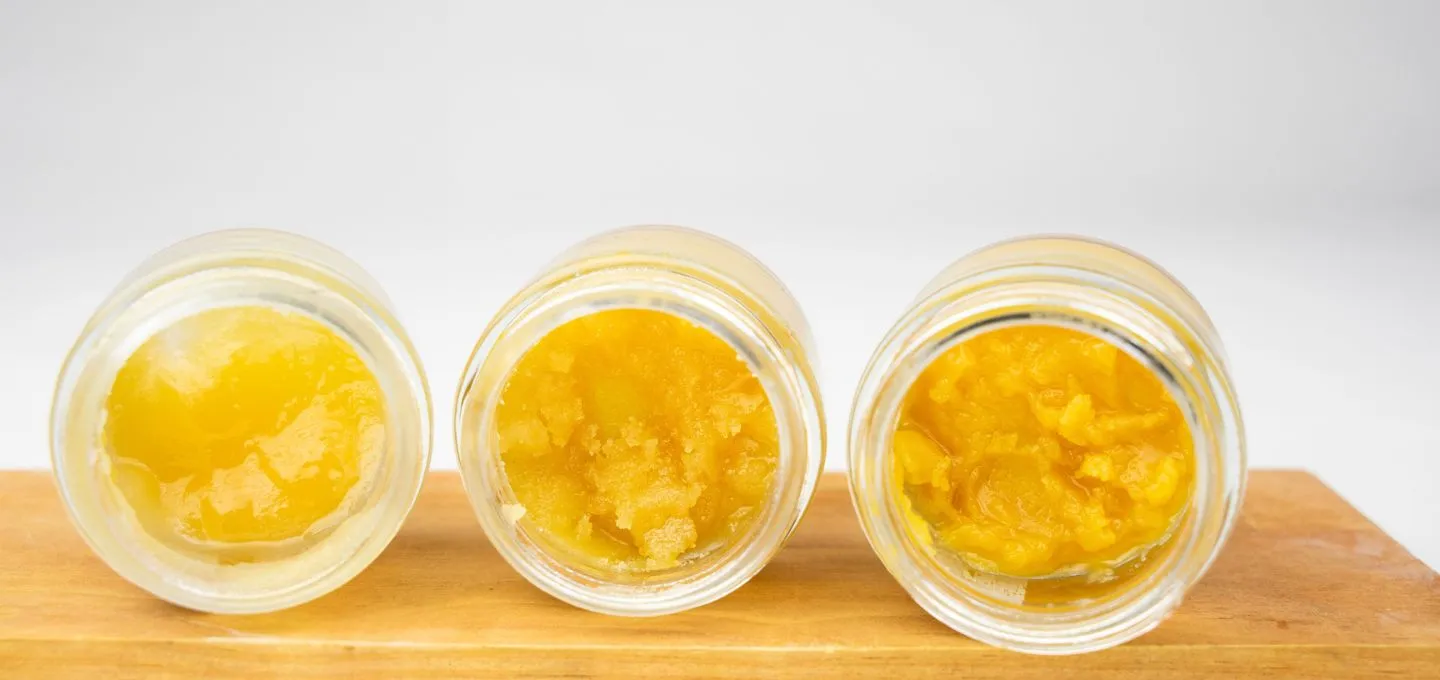
Badder is a soft, whipped cannabis concentrate with a smooth, creamy consistency, often compared to cake batter. It belongs to the family of concentrates often called “wax.”
Table of Contents
Why is it called badder?
The name is a playful spelling of batter, for the cake-batter look. It is related to budder, named for butter. The spellings aren’t standardized, so brands use them loosely.
How badder is made?
Badder starts as extracted oil, most often from hydrocarbon extraction, or from solventless rosin. It is whipped as it is purged or after it cures. Whipping is more than adding air. It is thought to encourage tiny THCA crystals that stay evenly suspended in a terpene-rich oil. Shatter is glass-like, and diamonds are large separated crystals, but badder is a smooth suspension of microscopic ones.
- Hydrocarbon badder: Producers often purge in a vacuum oven at low heat, around 90 to 110 degrees F (32 to 43 degrees C), while agitating. High heat boils off delicate terpenes.
- Rosin badder: Hash rosin is often cold-cured in sealed jars, producers often cite roughly 50 to 65 degrees F, until terpenes separate, then whipped into a wet batter.
- Fresh-frozen plants give live resin badder.
Badder vs budder, crumble and shatter
| Concentrate | Consistency | How it’s made | Handling |
| Badder | Loose, creamy, cake-batter | Whipped under low heat or vacuum | Scoops cleanly, sticks to tools |
| Budder | Firmer, like softened butter | Whipped into a tighter block | Holds its shape |
| Crumble | Dry, chalky, honeycomb-like | Purged longer or whipped longer | Breaks apart easily |
| Shatter | Hard, glassy | Purged flat without agitation | Snaps, shards can fly |
Use and storage
Most people dab badder. Because it is terpene-rich, many dabbers prefer lower temperatures, roughly 450 to 550 degrees F, which can taste smoother than very hot dabs. Badder often tests around 60 to 85 percent THC. Store it airtight in glass, cool and away from light. See auto-buddering for texture changes.
WWhy badder matters for medical marijuana patients?
Badder is far stronger than flower, so talk to your doctor or a budtender first and start with a very small dose. Check the certificate of analysis for residual solvents. Quality badder shouldn’t look green.
Related terms
Frequently asked questions
What is the difference between badder and budder?
Budder is firmer, like softened butter. Badder is looser and saucier.
Can badder be solventless?
Yes. Rosin badder uses heat and pressure, and is often cold-cured and whipped.
Sources
- Weedmaps. Badder, batter and budder.
- Weedmaps. Badder concentrates.
- Cannigma. Cannabis wax: types and consistency.